Where My Seats At?
On January 28, 1986, the Space Shuttle Challenger lifted off from Kennedy Space Center in Florida. Seventy-three seconds later, it broke apart. All seven astronauts on board were killed.
The technical cause was a failure of the O-rings, rubber seals in the rocket boosters that were not designed to withstand the unusually cold temperatures that morning. But in 1996, sociologist Diane Vaughan revealed something far more unsettling in her book, The Challenger Launch Decision. The real cause wasn't a sudden failure. It was a slow, quiet one.
NASA had known about the O-ring problem for years. Engineers had flagged it repeatedly. But the shuttle had kept flying. And every time it came back safely, the risk felt a little smaller. The deviation from the safety standard gradually became the new normal. Nobody decided to be reckless. A series of seemingly harmless decisions, made one at a time, moved the organisation towards a catastrophic outcome.
Vaughan called this the Normalisation of Deviance. The process by which an unsafe practice becomes accepted as normal, simply because it hasn't caused a disaster yet.
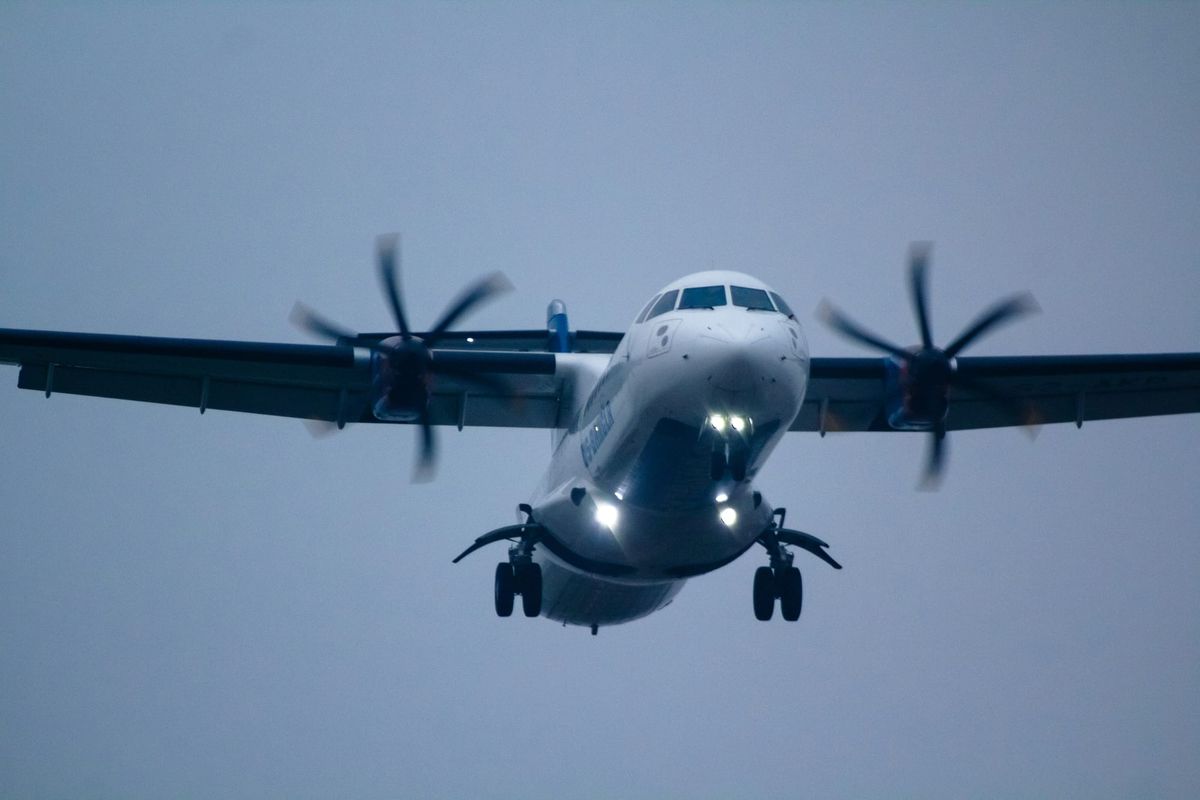
I thought about Challenger yesterday on my flight back from Hyderabad to Mysore.
I was in my usual seat on the ATR. Window seat, middle of the aircraft. If you fly on smaller planes regularly, you learn quickly that this is where the ride is smoothest.
The flight wasn't full. A few rows ahead of me, a fellow passenger wanted to change his seat. He called over one of the crew and asked if he could move.
She said no.
He accepted it and sat back down. A few minutes later, another crew member walked past. He tried again with the same question.
She said yes, go ahead.
He moved. The flight took off. Everything was fine.
But I couldn't stop thinking about what I had just witnessed.
Two people. Same airline. Same flight. Same uniform. Two completely opposite answers to the same question.
The first crew member wasn't being difficult. On a small aircraft like the ATR, where you sit actually matters. The weight of passengers affects the balance of the aircraft, and that balance is a safety consideration. Seat changes need to be managed carefully. It is not just a preference issue. It is a process.
The second crew member either didn't know this, or didn't think it mattered enough in that moment.
And nothing went wrong. This time.
That is exactly the problem.
When a process is bypassed and nothing bad happens, it quietly sends the wrong signal. To the passenger. To the crew member. To anyone watching. It suggests the rule wasn't really necessary. That common sense is good enough. That the process was probably overkill.
This is the Normalisation of Deviance in action. Not dramatic. Not deliberate. Just one small shortcut, on one ordinary flight, that passed without consequence. And the next time, it feels even easier to skip.
As I wrote in an earlier blog, "Table Number 12," a small step in a hotel process was skipped, and the guest experience quietly fell apart. Nobody set out to break the process. One link in the chain didn't hold. The difference here, of course, is the stakes. A breakfast order going to the wrong table is an inconvenience. An unmanaged weight distribution on a small aircraft is something else entirely.
So here is the question worth asking in your own team or organisation. Does every person who is part of your process understand not just what to do, but why it exists? Because the moment someone doesn't know the why, they make their own judgement call. Sometimes they get away with it. And that is often the most dangerous outcome of all. Because it makes the next shortcut feel even safer.
No fundamental decision is ever made to do things wrong. Just a series of small ones that quietly add up.
Diane Vaughan said that about NASA in 1986. It applies just as much to an ATR flight yesterday.
Nothing going wrong is not the same as everything being right.
I hope this helps you Shoot to the Top!