
Faster in Traffic!
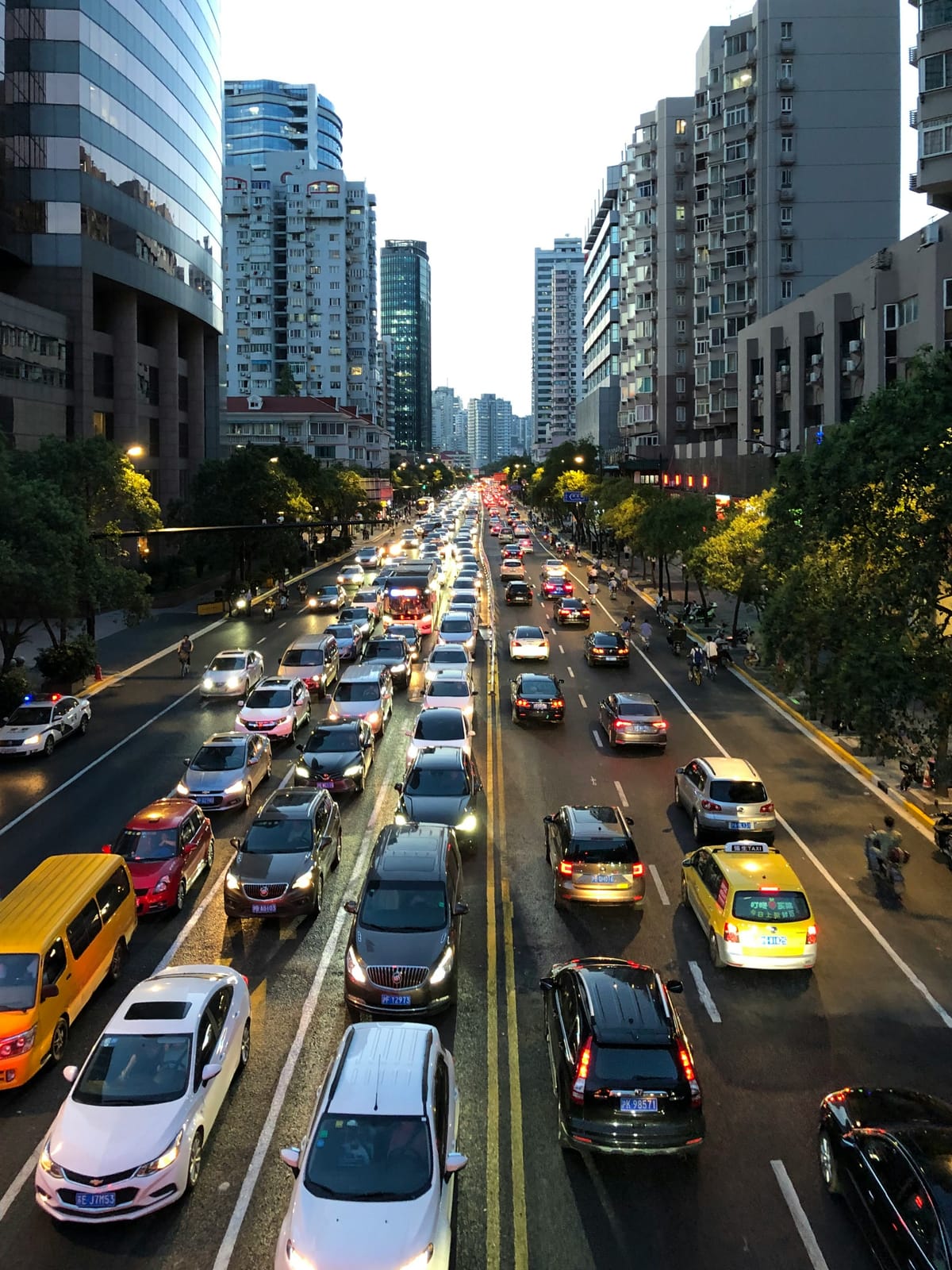
It was 7:45 on a quiet Tuesday morning. The roads were empty, the air was still, and Mysore hadn't quite stirred to life yet. As I settled into the back seat, I noticed something that I'd seen many times before but never really stopped to think about — my driver was cruising along at a leisurely 40 km/h. No rush. No urgency. Just a steady, unhurried pace on roads that were practically begging to be driven faster.
I didn't think much of it.
Then came the evening.
It was past 6 PM, and the city had transformed completely. The same roads were now a noisy, jostling maze of cars, autos, two-wheelers, and pedestrians all competing for the same few inches of tarmac. The kind of traffic that makes you instinctively check the time and sigh. And yet — there was my driver, weaving through it all with surprising confidence, averaging a steady 50 km/h.
I sat up.
Faster in traffic? Slower on empty roads?
I leaned forward and watched more carefully. He wasn't being reckless. He was... energised. Alert. Engaged in a way he simply hadn't been in the quiet of the morning. The chaos around him hadn't slowed him down — it had switched something on.
That's when it hit me. He wasn't reacting to the road. He was reacting to the competition.
The Invisible Accelerator
We often think of competition as something to be wary of — a threat, a source of stress, a zero-sum game where someone else winning means you losing. In many workplaces, the very word carries a negative charge.
But what I witnessed from that back seat told a very different story.
My driver had no conscious strategy. He wasn't thinking, "There are fifty other vehicles on this road, so I'd better up my game." But something primal and powerful was at work. The presence of others — moving, competing, jostling — had raised his performance instinctively and effortlessly. Without a single word being said, the environment had pushed him to find a higher gear.
Isn't that exactly what happens to us at work?
What the Rush Hour Taught Me
Think about the last time you produced your absolute best work. Chances are, there was some form of competitive pressure in the picture — a colleague raising the bar, a rival company launching something impressive, a deadline that forced you to be sharper than comfortable.
Elite athletes almost never set personal records in training. They do it in races, surrounded by others pushing at the same limits. Businesses innovate most boldly when a strong competitor enters their space. Teams sharpen up almost automatically when a hungry new joiner arrives with fresh energy and high ambition.
Competition, when viewed the right way, is not a threat. It's a stimulus.
Here are three ways to harness it:
Use it as a benchmark. When someone around you is performing exceptionally well, resist the urge to feel diminished. Instead, ask yourself what they're doing differently. Let their standard quietly raise yours.
Design for it as a leader. Healthy competition doesn't just happen — it can be cultivated. Visible scoreboards, peer recognition, cross-team challenges, and pairing strong performers together are all ways to bring out the best in your people without manufacturing artificial pressure.
Welcome the discomfort. That subtle unease when a peer gets recognised or a competitor makes a bold move? Don't dismiss it. That feeling is your internal compass pointing toward where you want to go. Use it.
Empty Roads Are Comfortable. Traffic Builds Champions.
My driver will probably never know that his evening commute re-taught me something about peak performance. But the lesson was clear — we are wired to rise when we are challenged, pushed, and surrounded by others in motion.
So the next time you find yourself in the thick of it — the crowded room, the competitive market, the team full of talent — don't wish for the empty road.
Embrace the traffic.
I hope this helps you find your accelerator and Shoot to the Top!